Full truckload trucking with Gelle Transport
Full truckload (FTL) trucking is the simplest and often fastest way to move a large shipment. Your freight is the only freight on the trailer, so it travels straight from your dock to your customer’s dock without being unloaded, sorted or reloaded along the way. That means fewer touches, less risk of damage and more predictable transit times.
When full truckload makes sense
FTL is usually the right choice when you have around 10 or more pallets, freight that fills most of a 53-foot trailer, or shipments heavy enough to approach legal weight limits. It also makes sense for smaller shipments that are fragile, high-value or time-sensitive and should not pass through LTL terminals.
Equipment and capacity
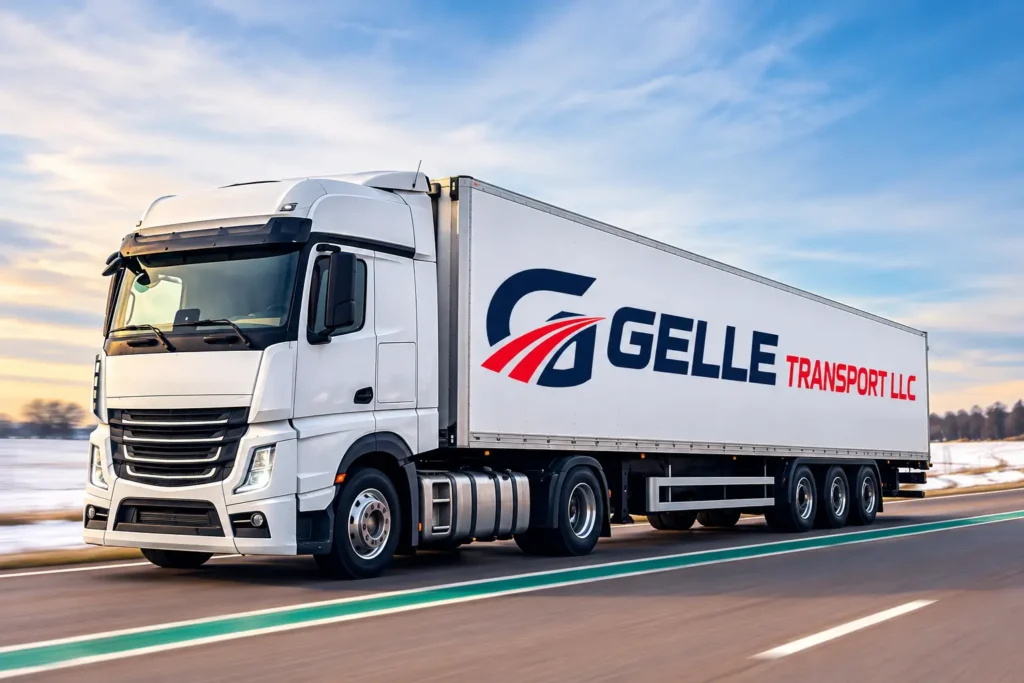
Gelle Transport runs dry van and flatbed full truckload freight. A standard 53-foot dry van typically carries 24–26 standard pallets single-stacked and loads up to roughly 42,000–45,000 lb of cargo, depending on the tractor and trailer weight. Tell us your pallet count, weight and dimensions and we will confirm the right equipment.
What’s included
Who it’s for
Manufacturers, distributors and retailers shipping large or recurring loads. See the industries we serve.
How it works
- 01
Request a quote
Share pickup and delivery locations, freight details, equipment and dates.
- 02
Confirm the plan
We confirm equipment, appointments and price before dispatch.
- 03
Pickup and transit
On-time pickup, secure loading and proactive updates from 24/7 dispatch.
- 04
Delivery and POD
Delivery to the agreed appointment with signed proof of delivery.
Coverage across the United States
We dispatch from North Kansas City, Missouri and serve shippers across the continental United States. Popular service areas for full truckload trucking include:
Full Truckload FAQs
How many pallets fit in a full truckload?
A 53-foot dry van typically holds 24–26 standard 48×40-inch pallets single-stacked, or more if your freight can be double-stacked safely.
Is full truckload faster than LTL?
Usually, yes. FTL freight moves directly from pickup to delivery, while LTL freight is routed through terminals and may be transferred between trailers.
Can you handle multi-stop truckloads?
Yes. We can plan multiple pickups or deliveries on one truckload when the stops are on a sensible route.